What is self-handicapping?
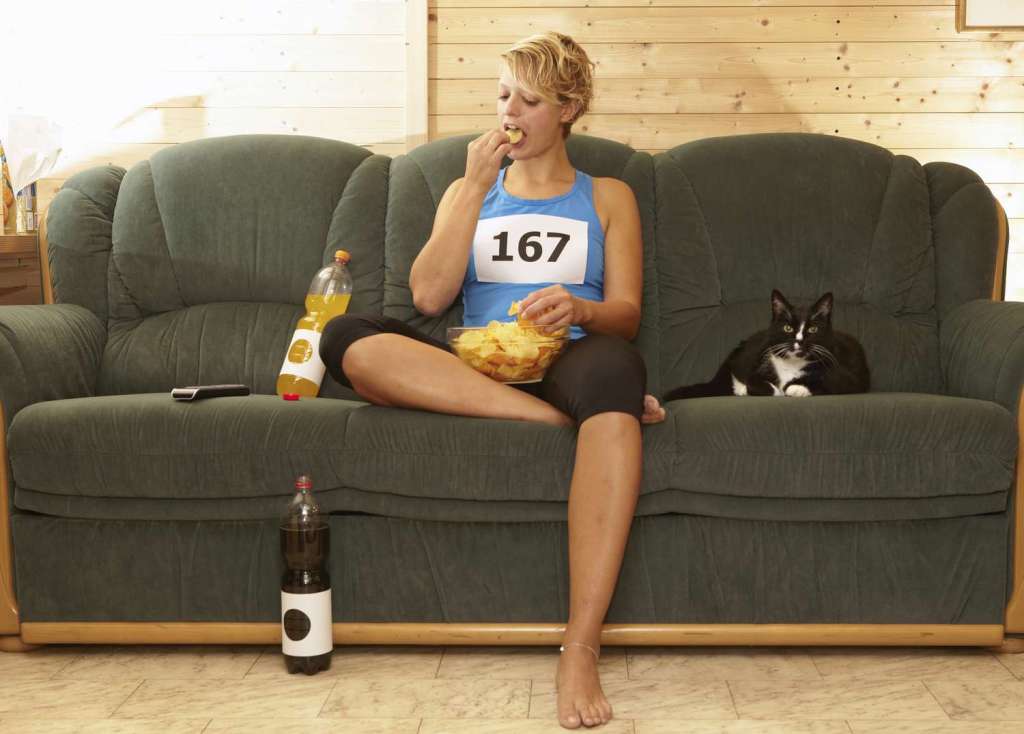
Self-handicapping can take on many forms. The main idea is that someone creates their own obstacle, in order to protect their self-esteem if they don’t perform well. This is often present in sports and other high-stress environments. For example, “When the chess grand master Deschapelles began to doubt his ability, he paradoxically offered every opponent an extra pawn and an extra move” (Adam and Joseph). Thus, he could always rationalize the lost, as he gave the opponent an upper-hand in the match.
How does it relate to the casino?
“On being happy but fearing failure: The effects of mood on self-handicapping strategies”
The article above is a study conducted by the University of New South Wales on 94 psychology students. The main premise was showing two different groups uplifting or demoralizing videos, in order to alter their mood. Afterwards, they were asked whether they wanted to participate in a new task. The authors conclusively determined that “happy” participants were less likely to try something new, compared to their counterparts (Adam and Joseph). This study is more-so a confirmatory analysis. For example, when someone is happy with their job, they are less likely to work for a new company with new bosses that only pays slightly better. There is too much to “lose” in that sense. However, for those unhappy with the same job, they may even be willing to take a pay cut, if that results in a more pleasant work environment. These same tenants hold true in the casino. For gamblers, happy with their current situation, they are less likely to place a risky bet. They are self-handicapping as they fear the losses more and how it could affect their current lifestyle. On the contrary, gamblers who are unsatisfied with their current lifestyle may be more willing to place riskier bets. According to results rom a U.S. census, “The most depressed 25% of respondents have over twice the problem gambling symptoms of the least depressed 25% of respondents” (John). After all, a loss would be a miniscule difference to their current situation, while they believe a “win” could get them out of the hole they’re in.
Sources:
Alter, Adam and Forgas Joseph. “On being happy but fearing failure: The effects of mood on self-handicapping strategies.” Journal of Experimental Social Psychology, 2006, https://pages.stern.nyu.edu/~aalter/handicapping.pdf. Accessed 4 November 2022.
Welt, John, et. al. “Predictors of Problem Gambling in the U.S.” Springer Science + Business Media, 24, August 2016, https://link.springer.com/content/pdf/10.1007/s10899-016-9639-1.pdf. Accessed 9 November 2022.
 Failing at the Casino